 India
 Global
 UAE
 Nigeria
 Singapore
 Kuwait
 Monaco
 Qatar
 Belgium
 Netherlands
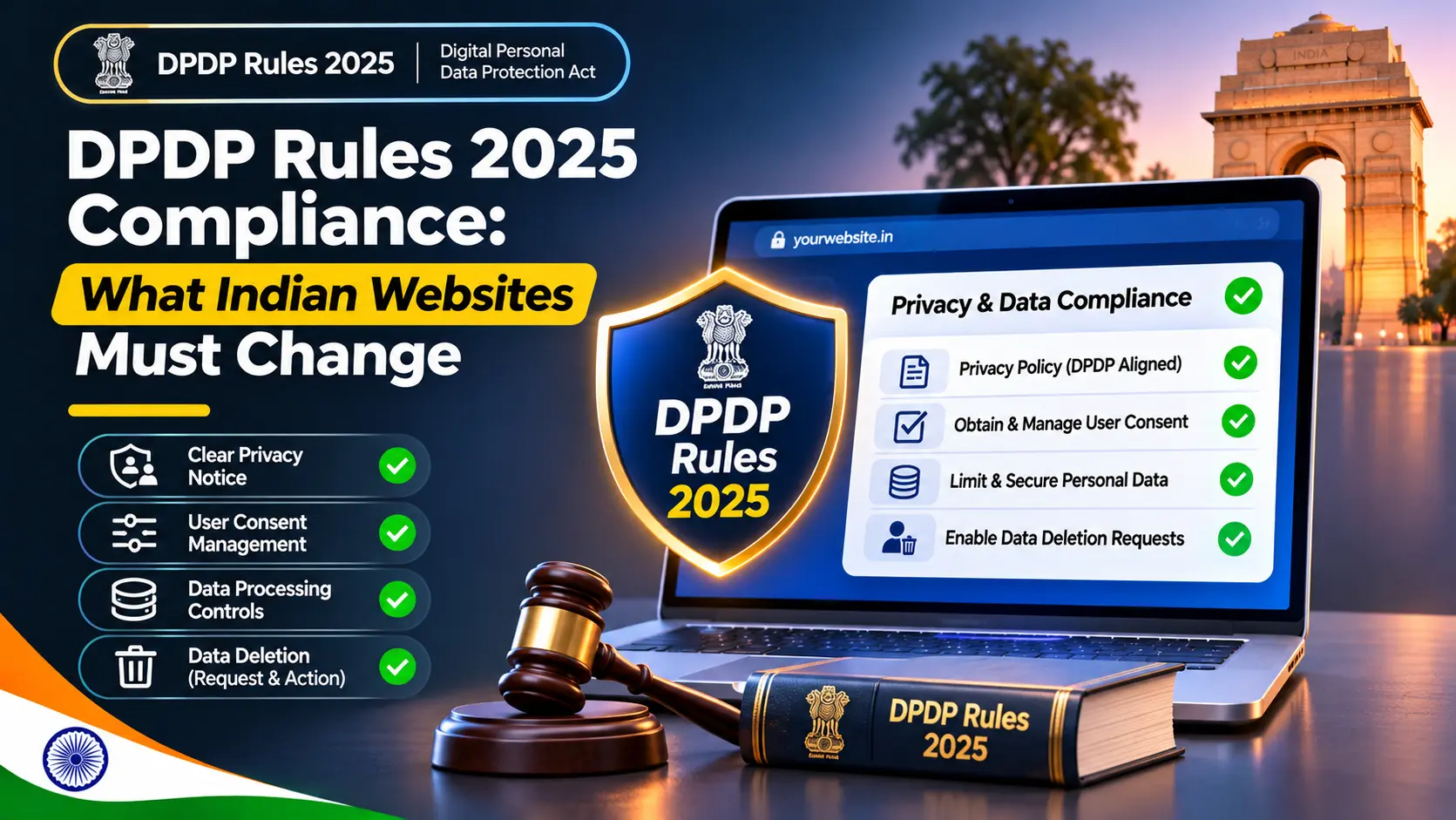
Short answer: DPDP Rules 2025 compliance comes in phases. MeitY notified the Rules on 13 November 2025, consent manager registration started a year later, and the core duties apply from about 13 May 2027. Before then, Indian websites and apps need stand-alone consent notices, easy withdrawal, breach alerts to users and the Board, and planned retention and erasure.
Key takeaways
- The Rules were published in the Gazette as G.S.R. 846(E) dated 13 November 2025, and the main obligations start eighteen months later, around 13 May 2027.
- Every consent notice must stand on its own, list the personal data item by item, state the purpose, and show how to withdraw consent as easily as it was given.
- After a personal data breach you must tell affected users without delay and send the Data Protection Board a detailed report within 72 hours.
- All data fiduciaries must keep processing logs for at least one year, and large e-commerce, gaming and social platforms must erase inactive users' data after three years.
- This is not legal advice: confirm your dates, your category and your contracts with a qualified lawyer or adviser.
What is the DPDP Rules 2025 timeline from the official notification?
The Digital Personal Data Protection Act was passed by Parliament on 11 August 2023, and the Government announced the notified Rules on 14 November 2025 with an 18-month phased compliance timeline, according to the PIB release from MeitY (2025). Rule 1 of the Rules, published by MeitY as the DPDP Rules, 2025 (Gazette G.S.R. 846(E), 2025), sets three start points counted from the Gazette dated Thursday 13 November 2025.
PhaseDate (counted from 13 Nov 2025)What starts On publication13 November 2025Rules 1, 2 and 17 to 21: definitions and the Data Protection Board's set-up and working One year13 November 2026Rule 4: registration and duties of Consent Managers Eighteen monthsAbout 13 May 2027Rules 3 and 5 to 16, 22 and 23: notices, security, breach intimation, retention, children's data, rights, significant data fiduciaries A separate commencement notice, G.S.R. 843(E) of the same date, brings the matching sections of the Act into force on the same three steps, so the consent, notice and breach sections of the Act also wait for the eighteen-month mark. Some commentators count from 14 November instead, so ask your adviser to confirm the exact day, and to check whether any later notification has changed the schedule.
What must a consent notice on an Indian website or app now say?
Rule 3 is the change most visible to your visitors. The notice has to be understandable on its own, not buried inside terms and conditions, and it has to give, in clear and plain language:
- an itemised description of the personal data you collect (name, mobile number, email, address, order history, location, and so on);
- the specific purpose of each use, and a description of the goods or services the processing makes possible;
- a link and any other means to withdraw consent, with withdrawal as easy as giving consent was;
- how to exercise rights under the Act and how to complain to the Data Protection Board.
The PIB release summarises the same point: consent notices must be standalone, clear and simple, and must explain the specific purpose of collection. In practice that means reviewing every form that collects data: enquiry and quote forms, sign-up and OTP login screens, checkout pages, WhatsApp opt-ins, newsletter boxes and chatbot widgets. A pre-ticked box or a single "I agree to everything" line is unlikely to meet this standard. If you sell online, our guide to building an e-commerce website for Indian shoppers shows where these forms usually sit in the journey.
Withdrawal must be as easy as consent
If consent took one tap in your app, a five-step email process to withdraw is not comparable. Add a visible "manage my consent" option and make sure withdrawal really stops processing in your CRM and marketing tools.
How does DPDP breach reporting work for a website owner?
Rule 7 has two audiences. Each affected person must be told, without delay and through their user account or a registered contact channel, what happened, the likely consequences for them, what you are doing about it, what they can do to protect themselves, and who to contact. The Board must receive a first description without delay, then a detailed report within seventy-two hours of you becoming aware, covering causes, mitigation, any findings about who caused it, and the alerts sent to users, as set out in the DPDP Rules, 2025 (MeitY, 2025).
This sits alongside, not instead of, the separate duty to report cyber incidents to CERT-In within 6 hours under its Directions of 28 April 2022 (CERT-In, 2022). A breach on an Indian site can therefore start two clocks. Write one incident runbook that names who files each report and keeps ready-to-edit message templates for users in English and the regional languages your customers use.
What does the DPDP Act require for data retention and erasure?
Rule 8 does two things. First, for all data fiduciaries it sets a floor: keep personal data, associated traffic data and processing logs for at least one year from the date of processing, then erase them unless another law needs longer. The Rules' own example is an e-book platform that must keep order, payment and delivery records for a year even if the buyer deletes the account. Second, it sets a ceiling for three classes in the Third Schedule, as published in the DPDP Rules (MeitY, 2025):
Class of data fiduciaryThreshold of registered users in IndiaErase after E-commerce entityNot less than two croreThree years from the user's last contact or use (or the Rules' start date, whichever is later) Online gaming intermediaryNot less than fifty lakhThree years, same rule Social media intermediaryNot less than two croreThree years, same rule Those platforms must warn the user at least forty-eight hours before erasure, so the user can log in and keep the account. A seller on a marketplace is not counted as the e-commerce entity here. Most Indian SMEs will not reach these thresholds, but every business needs the one-year log floor and a written retention schedule for each data type.
Which website and app changes should you make before May 2027?
The work is mostly product and engineering, with legal review on top. A practical order:
- Map your data. List every form, app screen, API and third-party tool (payment gateways such as Razorpay or PayU, analytics, ad pixels, CRM, WhatsApp Business) that touches personal data.
- Rewrite notices. One stand-alone notice per purpose, with an itemised data list and withdrawal link, reviewed by your lawyer.
- Build consent records. Store what each person agreed to, when, and which notice version they saw.
- Harden security. Rule 6 names encryption, masking or tokens, access control, logging and monitoring, backups, and security clauses in contracts with processors such as hosting and cloud providers.
- Publish a contact. Rule 9 requires the business contact of a Data Protection Officer, if you have one, or a person who can answer data questions, shown prominently on the website or app.
- Set up rights and grievances. Rule 14 asks you to publish your response period, which cannot exceed ninety days, and to build the process to meet it.
- Check for children's data. Rule 10 requires verifiable parental consent before processing a child's data, which matters for education, gaming and some health apps.
Steps 3 to 6 usually need code changes. A security audit of your website or app is a sensible starting point for step 4, and website security hardening covers encryption, access control and logging. For consent records and rights requests inside a portal or app, the work falls under web application development.
What are the DPDP penalties, and what should you confirm with an adviser?
The Schedule to the Act sets maximum penalties, including up to ₹250 crore for failing to take reasonable security safeguards, up to ₹200 crore for failing to notify the Board or users of a breach, up to ₹200 crore for breaching the duties on children's data, and up to ₹50 crore for other breaches of the Act or Rules, per the Digital Personal Data Protection Act, 2023 (India Code, 2023). These are ceilings set by the Board case by case, not fixed fines.
Questions worth taking to a lawyer or data protection adviser:
- Are you a data fiduciary, a data processor for a client, or both?
- Could you be notified as a significant data fiduciary, with audits and impact assessments?
- Which other laws (RBI, SEBI, IRDAI, health or tax rules) require you to keep data longer than DPDP does?
- Do your vendor contracts cover breach notice timelines and deletion on exit?
Alive Inc. builds and maintains websites and apps, so we can make the technical changes, but the legal interpretation should come from your own adviser.
Frequently Asked Questions
When do the DPDP Rules 2025 come into force?
In three steps from the Gazette of 13 November 2025. Rules on the Data Protection Board started at once. Consent Manager registration started one year later, on 13 November 2026. Notices, security safeguards, breach reporting, retention and data rights start eighteen months after publication, around 13 May 2027. Confirm the exact day with your adviser.
Does the DPDP Act apply to a small business website in India?
Generally yes, if the site or app collects digital personal data such as names, phone numbers or email addresses through forms, logins or orders. Some extra duties, like the three-year erasure rule or significant data fiduciary audits, apply only to large platforms or notified entities. Check your own position with a qualified lawyer.
How soon must a data breach be reported under the DPDP Rules?
Affected users must be told without delay, and the Data Protection Board must get an initial description without delay followed by a detailed report within 72 hours of becoming aware, unless the Board allows more time on a written request. A separate 6-hour report to CERT-In may also apply to the same incident.
How long should we keep customer data and logs?
The Rules require every data fiduciary to keep personal data, traffic data and processing logs for at least one year from processing, and then erase them unless another law needs longer. Large e-commerce, gaming and social platforms must also erase inactive users' data after three years, with 48 hours' notice.
What is a consent manager under the DPDP Rules?
A consent manager is a company registered with the Data Protection Board that lets people give, manage, review and withdraw consent through one platform. The PIB release says consent managers must be Indian companies. Registration rules under Rule 4 started on 13 November 2026, one year after the Rules were published.